
Hot, cold,
and the case for both.
Heat and cold do different things to your body, and a remarkable amount of what they do is the opposite of what your phone, your office chair and your sleep schedule are doing to you the rest of the week.
Your nervous system was built for stress that arrives and ends, not for stress that hums all day. Heat and cold give the body a beginning and an end again.
The technical name is hormesis: a brief, controlled stress that triggers a recovery response larger than the stress itself. Twenty minutes at 85°C, three at 4°C, and the body answers each one with cardiovascular conditioning, hormonal rebalancing and a deeper night of sleep.
None of this is exotic. It's what humans did for two thousand years before central heating, and what a generation of researchers in Finland, Japan and the Netherlands have been quietly measuring for the last thirty.
Three doors,
one nervous system.
Each works on its own. Together they cover the full thermal range, and the research suggests the combination is what really moves the needle on sleep, recovery and long-term cardiovascular health.

Sauna
70 – 95°C- Cardiovascular load like brisk walking
- Heat-shock proteins repair cells
- Drop in resting blood pressure
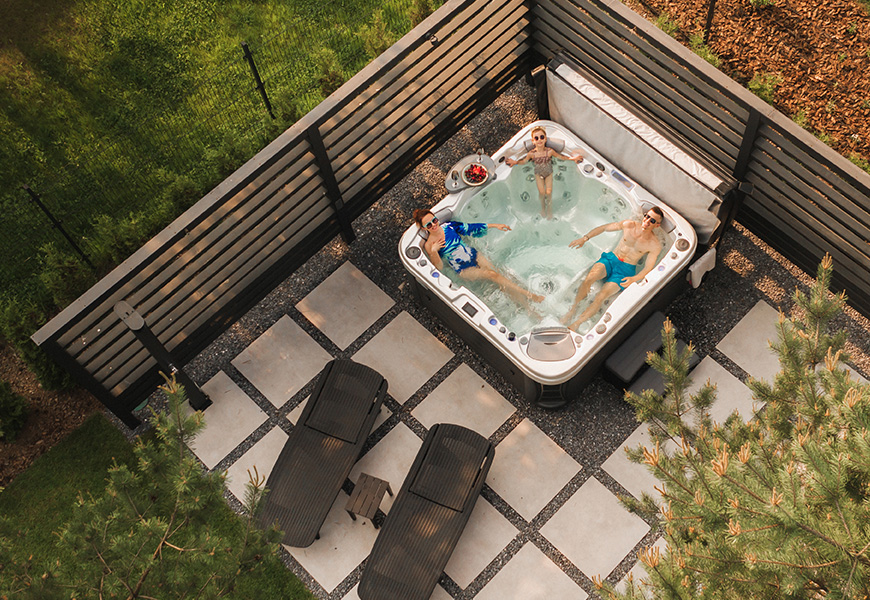
Hot Tub
37 – 40°C- Buoyancy off-loads the spine
- Blood flow rises ~50% in legs
- Parasympathetic nervous shift

Ice Bath
2 – 5°C- Norepinephrine rises 5×
- Brown fat activation
- Mood lift sustains 4–6 hours

Warm water is passive cardio for a stationary body.
At 39°C, your heart rate climbs by roughly 30% (the same load as a moderate walk), while buoyancy lifts almost 90% of your body weight off your joints and spine. The result is a cardiovascular dose without the impact, which is why warm immersion shows up in trials for hypertension, fibromyalgia and post-operative recovery.
The most-studied longevity habit nobody talks about.
Twenty thousand Finns, twenty years of follow-up, and a clear dose-response curve: the more sauna sessions per week, the lower the all-cause mortality. The mechanism (heat-shock proteins, vascular flexibility, parasympathetic rebound) is now mapped well enough to design protocols around.

Traditional
Heats the air to 80–95°C with a stove and stones. Sweating starts in five minutes, the cardiovascular load is significant.
- Air temp
- 80 – 95°C
- Humidity
- 10 – 20%
- Penetration
- Surface; air heats skin, skin heats body
- Best for
- Cardiovascular conditioning, social bathing, the deepest sweat

Infrared
Far-infrared panels warm the body directly without heating the air much. Gentler on the lungs, deeper on the tissue.
- Air temp
- 45 – 60°C
- Humidity
- ambient
- Penetration
- Up to 4cm into soft tissue
- Best for
- Recovery from training, lymphatic drainage, those who can't tolerate steam-heat
Reduction in cardiac mortality across men using a sauna 4–7× per week
Lower risk of dementia in the same 20-year Finnish cohort
Improvement in self-reported sleep quality after 30 days of regular use
Three minutes of cold,
six hours of clarity.
Cold immersion at 2–5°C is the shortest, most metabolically expensive of the three modalities. The trade-off is a pharmacological-scale catecholamine release with none of the pharmacology, and a tail of focus, mood and resilience that lasts the better part of a working day.
The case for contrast.
Heat dilates. Cold constricts. Cycling between the two (what the Nordic countries call kontrastbad) pumps blood through your vasculature in a way neither does alone. It's a workout for the blood vessels themselves, and the data on its effect is some of the strongest in this entire field.
- Trains one half of the vascular response
- Single-direction stress on the autonomic nervous system
- Strong, well-documented cardiovascular benefits
- Easier entry point; start with whichever fits the day
- Trains the full dilate-constrict response: vascular flexibility
- Larger drop in inflammatory markers than either alone
- Faster muscle-soreness recovery (DOMS −20% vs heat-only)
- Sharper post-session mood lift, longer-tailed
- What the longest-living sauna cultures have always done
One week,
kept simple.
The dose-response curve in the literature plateaus at roughly four to five sessions a week. This is what a balanced week looks like for someone with all three in the garden. Not a prescription, just a starting shape.
The papers behind the numbers.
Figures on this page are drawn from peer-reviewed research and represent average effects across study populations. Individual response varies. None of this is medical advice. If you're managing a heart condition or pregnancy, speak to your GP before starting heat or cold therapy.
Stop reading about it.
Start doing it.
A sauna, a hot tub and an ice bath, chosen for the evidence behind them, installed across the UK by our partner crew, ready in your garden in a single morning.